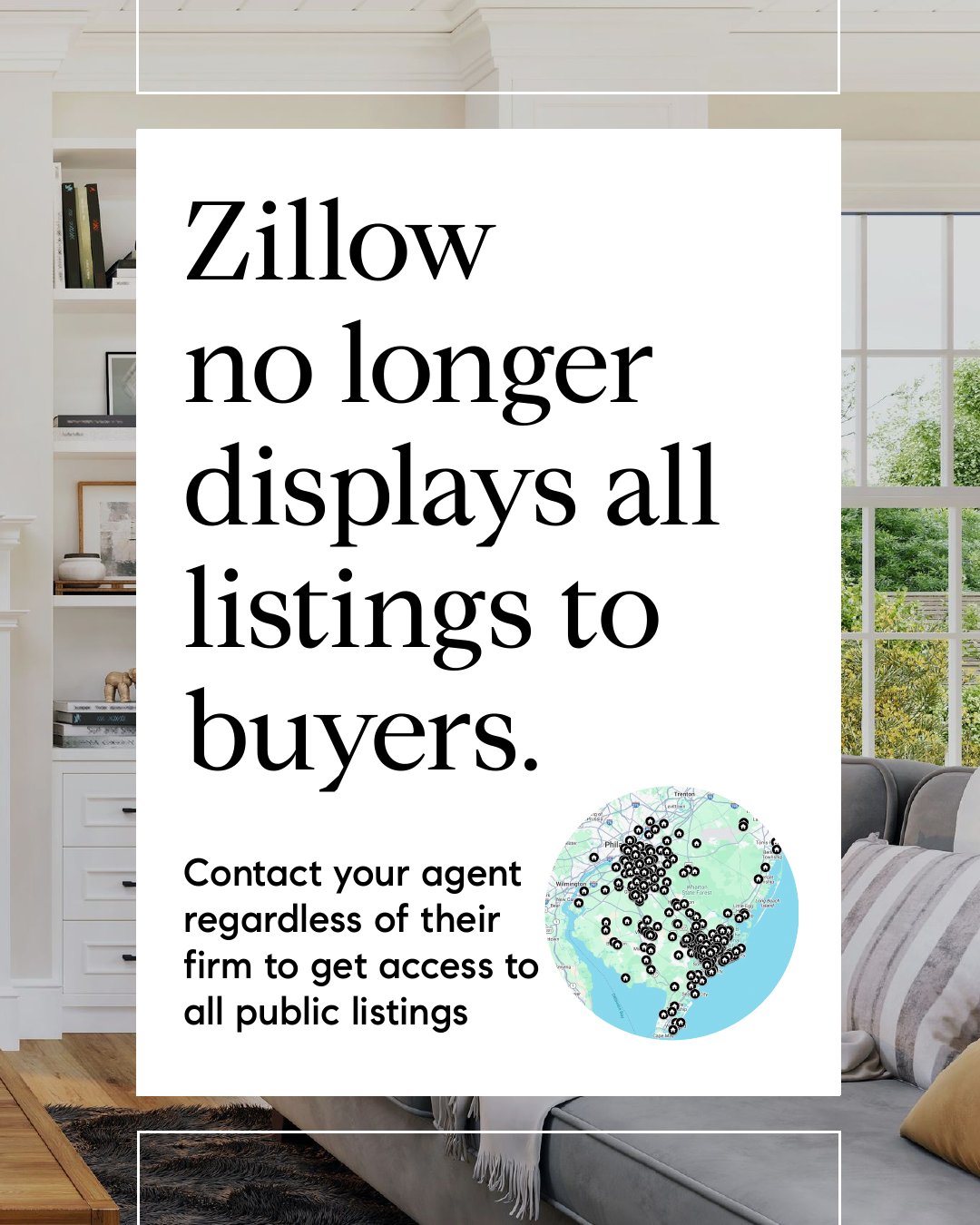
There’s a growing misconception among consumers that when they search on Zillow, they’re seeing everything that’s available for sale. They’re not.
Recent discovery uncovered in the ongoing Compass vs. Zillow litigation has brought to light something many real estate professionals have understood for years: Zillow curates the experience. Listings are filtered, prioritized, or penalized based on whether brokerages and agents comply with the rules Zillow has attempted to impose on the industry. This isn’t about consumer benefit — it’s about control.
And that distinction matters.
Zillow positions itself as a consumer-first platform, but in reality, it is a media and lead-generation company with its own financial incentives. When information is curated rather than comprehensive, consumers are no longer making decisions based on the full market — they’re making decisions based on what Zillow chooses to show them.
To be clear, most consumers don’t intend to be loyal to Zillow. They’re simply looking for information. In the same way someone might check Ticketmaster, SeatGeek, and StubHub when buying concert tickets, consumers naturally assume they’re cross-shopping when browsing homes online. The difference is that many don’t realize Zillow is only one slice of the market — not the market itself.
Some consumers do have brand loyalty. Just like Apple vs. Android, Zillow loyalty exists. But the most important question is: do you understand what you’re being loyal to?
When it comes to information quality, Zillow’s track record is mixed at best. Tools like the Zestimate and “recommended offers” have long been questioned for their reliability and accuracy — something Zillow openly acknowledges on its own website through wide valuation ranges and disclaimers. These estimates often confuse buyers and sellers alike, creating unrealistic expectations, misaligned pricing strategies, and unnecessary friction in transactions.
More concerning, Zillow’s business model has increasingly blurred the line between search, influence, and monetization. Recent class action lawsuits include allegations of RESPA violations and racketeering (RICO) tied to how Zillow drives consumer traffic and engagement — specifically steering users toward Zillow Mortgage and affiliated services. The irony is hard to ignore: a platform marketed as “simplifying” the buying process may actually be making transactions more expensive for consumers who remain loyal to the Zillow ecosystem.
And beyond cost, there’s the bigger issue: visibility.
Zillow does not show all listings that hit the MLS in every market. There are many consumer-facing websites that do provide a more complete picture, including Homes.com, Realtor.com, Compass.com, and others. In addition, many brokerages manage private listing networks — homes that are in pre-marketing, “coming soon,” or price-discovery phases. These properties may be preparing for market, undergoing final improvements, or strategically testing pricing before going fully public.
These listings are real. They are available. And they are often invisible to Zillow users.
This is why the most reliable, complete, and consumer-protective way to navigate a real estate transaction isn’t through allegiance to a website — it’s through a relationship.
A knowledgeable, local agent who is deeply plugged into the community has access to all layers of the market:
-
Public MLS listings
-
Private and coming-soon inventory
-
Pricing strategy insights
-
Local demand signals that no algorithm can replicate
Websites don’t negotiate. Algorithms don’t contextualize. Platforms don’t advocate.
If you want the full picture — not a curated one — the best place to start isn’t a search bar. It’s a conversation with a professional whose only incentive is helping you make the best possible decision.
That’s what truly puts the consumer first.